

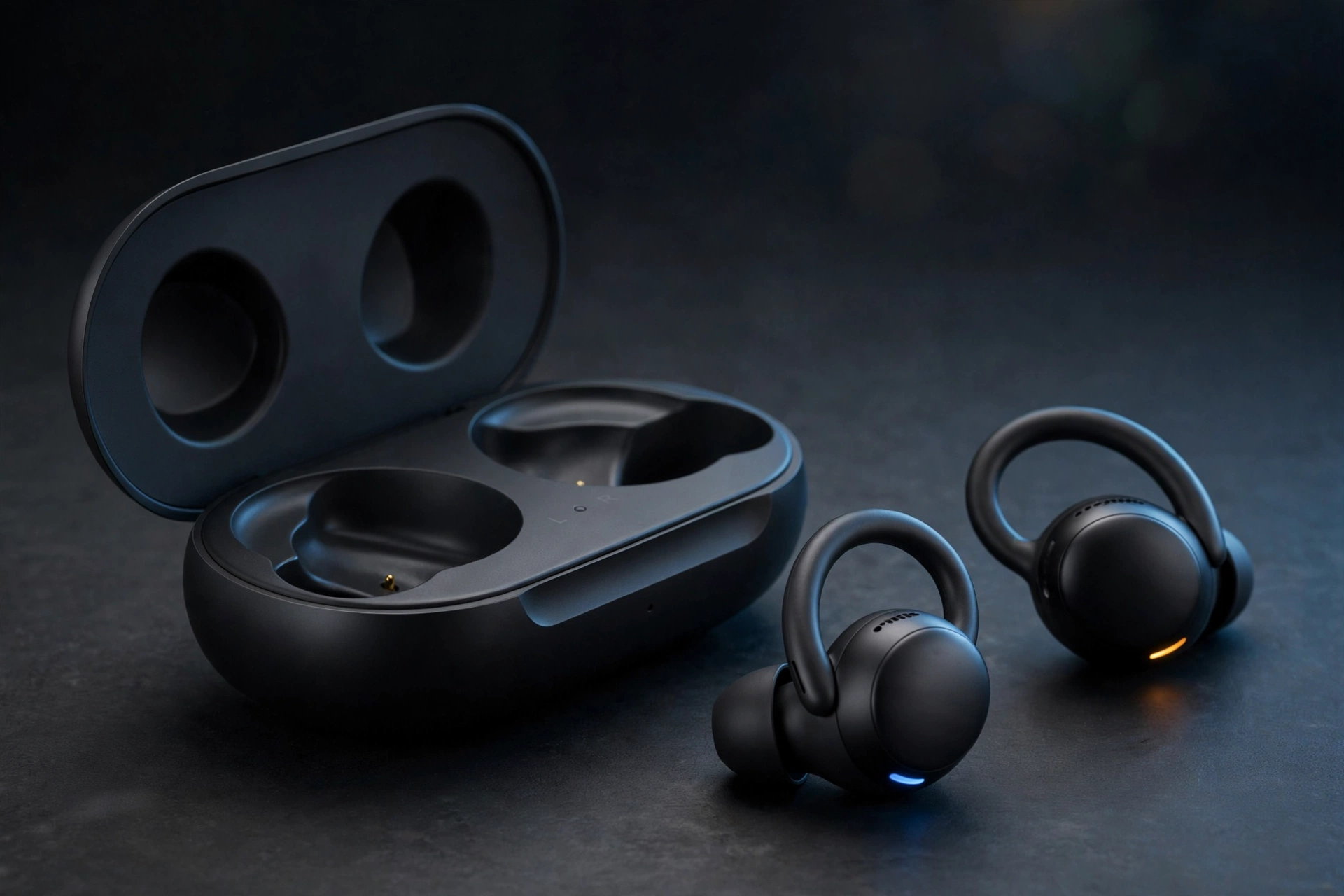
Samsung is preparing to enter the open-ear earbuds market with Galaxy Buds On, its first clip-on earbuds designed to keep your ear canals open while you listen. If you enjoy music during a walk, need to hear people at work, or want earbuds that feel less closed off from the world, traditional in-ear designs may not be ideal. But open-ear earbuds also raise important questions about sound quality, privacy, battery life, and whether they can compete with established options from Bose, Sony, and Shokz.
Galaxy Buds On aims to answer those questions with a clip-on fit, a TwinBoost speaker system, automatic volume adjustment, and new Galaxy AI features. Samsung has confirmed a South Korean launch on October 27, 2026, at ₩299,000, or approximately $220. The global rollout will happen in stages, but Samsung has not announced launch dates or prices for other countries. Here is what we know about the design, features, battery, and competition before launch.
Galaxy Buds On Price and Release Date
Samsung Galaxy Buds On will launch first in South Korea on October 27, 2026. The company has confirmed a local price of ₩299,000, which is approximately $220 USD. Black is the only confirmed launch color.
Samsung plans to bring Galaxy Buds On to other markets in stages. However, the company has not announced exact global release dates or prices for the United States, Europe, or other regions.
| Launch detail | Confirmed information |
|---|---|
| Product name | Samsung Galaxy Buds On |
| South Korea release date | October 27, 2026 |
| South Korea price | ₩299,000 |
| Approximate USD conversion | $220 |
| Confirmed launch color | Black |
| Global availability | Rollout in stages |
| Global dates and prices | Not announced |
The approximate US dollar price is a currency conversion, not a confirmed US retail price. Local taxes, import costs, and regional pricing can also affect what buyers pay.
For buyers outside South Korea, the main question is timing. Samsung has not yet confirmed when Galaxy Buds On will reach each market, so it is too early to give a reliable local release date or price.
Design: How the Clip-On Open-Ear Fit Works
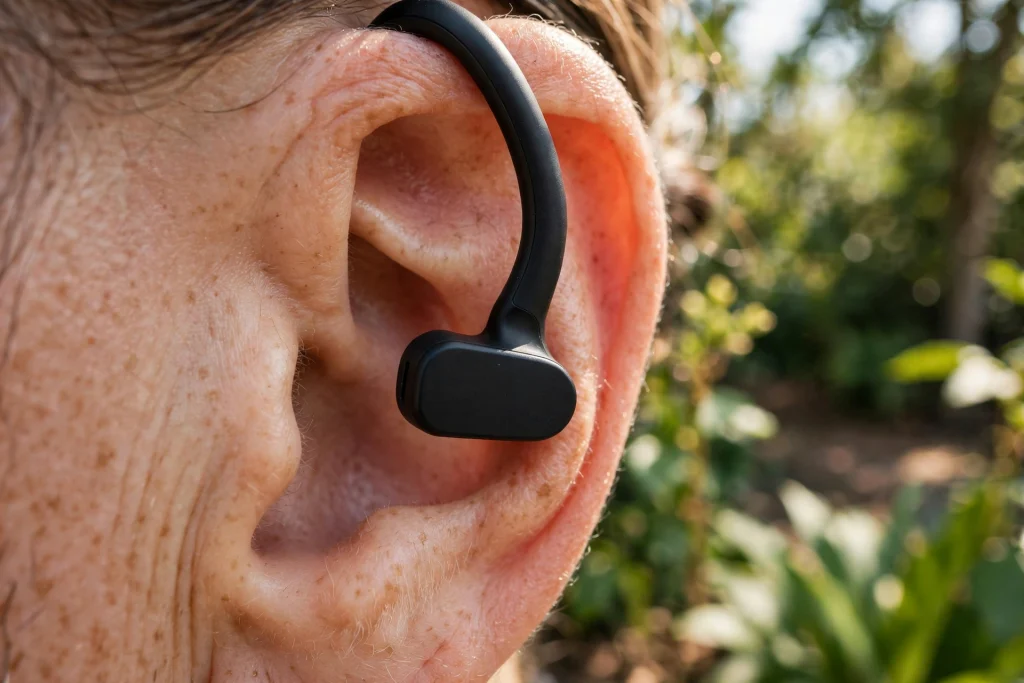
Galaxy Buds On uses a clip-on design that sits around the outer ear. Instead of sealing the ear canal with a silicone tip, the earbuds keep the canal open while directing sound toward the listener.
This is the biggest difference between Galaxy Buds On and traditional in-ear Galaxy Buds. You can listen to audio while remaining more aware of conversations, traffic, and other sounds around you.
Samsung says the design includes a wide contact area and an adjustable band. The company also studied different ear shapes while developing the fit. These choices are important because clip-on earbuds must stay secure without creating uncomfortable pressure.
Who could benefit from open-ear earbuds?
The design may suit several types of users:
- Runners and walkers: Hear more of the surrounding environment while listening to music. You should still stay alert to traffic and other hazards.
- Office workers: Listen to audio while remaining more aware of nearby conversations.
- Commuters: Hear announcements and some environmental sounds without removing the earbuds.
- People who dislike in-ear tips: Avoid the plugged feeling that some sealed earbuds create.
- Everyday listeners: Keep audio playing while interacting with people around them.
Fit is personal, however. An adjustable band does not guarantee that the earbuds will feel comfortable on every ear. Buyers should wait for hands-on reviews before judging long-term comfort, stability during exercise, and pressure after several hours of use.
Open-ear designs also have a trade-off. Because the ear canal remains open, outside noise is not blocked in the same way as it is with sealed earbuds. That can be useful in some situations, but less helpful in noisy environments.
Sound: TwinBoost Bass, Automatic Volume, and Sound Leakage
Open-ear earbuds face a different sound challenge from traditional in-ear models. They need to deliver clear audio without sealing the ear canal, and they must do so while limiting sound that escapes toward other people.
Samsung’s answer is its TwinBoost speaker system, which uses an 11.3 mm driver. Galaxy Buds On also includes automatic volume adjustment and Audio Leakage Reduction.
TwinBoost speaker system
The 11.3 mm driver is part of Samsung’s effort to deliver a fuller listening experience in an open-ear design. However, driver size alone does not prove how good the earbuds will sound. Tuning, fit, sound processing, and the listening environment also affect the result.
Samsung’s final sound quality will need to be judged through real-world testing. In particular, listeners should look for clear vocals, balanced instruments, and enough bass for music without making voices or other sounds muddy.
Automatic volume adjustment
Galaxy Buds On can adjust volume based on surrounding noise. In theory, this can reduce the need to change the volume manually when moving between quieter and noisier places.
This feature may be useful when walking from a quiet office into a busier street or moving around a shared workspace. Its real value will depend on how smoothly the volume changes and whether it responds well to different types of background noise.
Automatic volume does not replace safe listening habits. Keep the volume at a comfortable level and remain aware of your surroundings.
Audio Leakage Reduction
Because open-ear earbuds do not seal the ear canal, some sound can travel outward and be heard by nearby people. Samsung’s Audio Leakage Reduction is designed to limit that sound spill.
This could make Galaxy Buds On more practical for offices, libraries, and shared spaces. Still, the name does not mean the earbuds are completely private. Leakage can depend on volume, fit, the audio being played, and the distance between people.
What open-ear earbuds give up
Open-ear earbuds generally offer less passive noise isolation than sealed in-ear models. They may also struggle to deliver the same sense of deep bass in noisy places because the ear canal is not sealed.
For listeners who want strong isolation during flights or detailed listening in loud surroundings, sealed earbuds may remain the better choice. Galaxy Buds On is aimed at people who value environmental awareness and an open fit as much as their music.
Battery Life and Charging
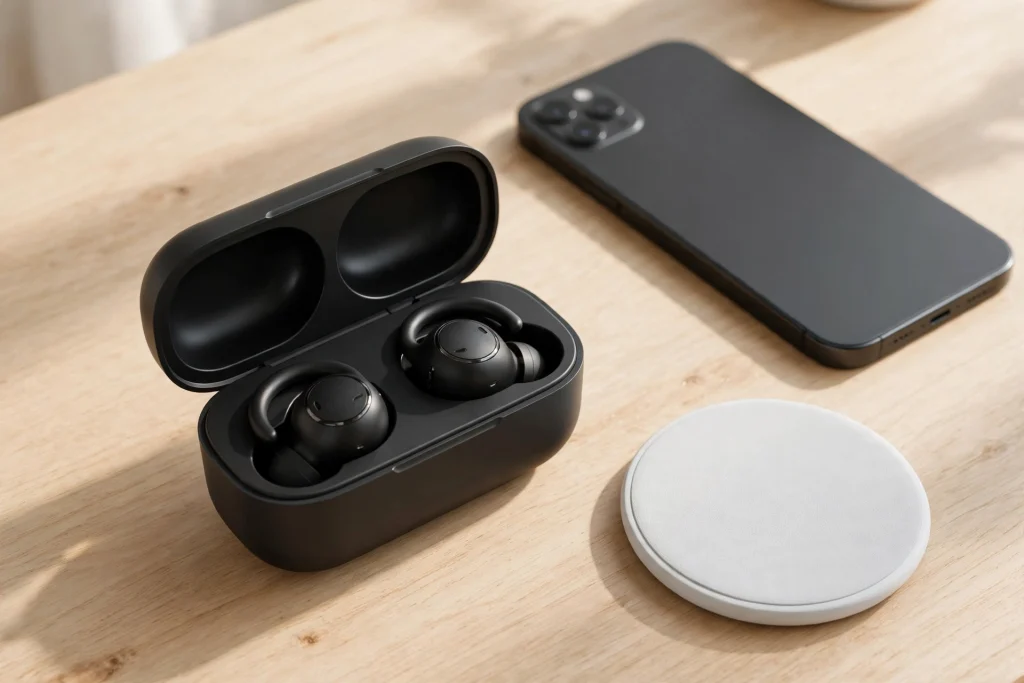
Samsung rates Galaxy Buds On for up to 9.5 hours of music playback per charge. The charging case extends total listening time, although Samsung has not provided a total combined battery figure.
The case supports both wired and wireless charging, giving users more than one way to recharge it.
| Battery detail | Galaxy Buds On |
|---|---|
| Music playback per charge | Up to 9.5 hours |
| Extra power from case | Yes |
| Case charging | Wired and wireless |
| Confirmed total playback with case | Not specified |
The 9.5-hour figure is a rated maximum, not a guarantee for every listening session. Actual battery life can vary with volume, connected features, call use, and other conditions.
Automatic volume adjustment and AI features may also affect real-world usage, depending on how they operate. Buyers who need earbuds for a full workday should wait for independent battery tests before deciding whether the case and earbuds meet their routine.
Call Quality: Three Microphones and Voice Pickup Technology
Samsung is also focusing on calls. Galaxy Buds On includes three microphones and a bone-conduction Voice Pickup Unit. Machine learning is used to help separate the user’s voice from background noise.
This combination is designed to make speech clearer when calling from a busy street, shared office, or other noisy place.
The microphones capture sound, while the Voice Pickup Unit provides another source of information about the user’s voice. Machine learning can then help distinguish speech from unwanted background sounds.
The technology sounds promising, but specifications alone cannot confirm call quality. Wind, traffic, crowd noise, and the way the earbuds fit may all affect performance.
Before buying, people who make frequent work calls should look for tests that cover both quiet rooms and noisy outdoor settings. They should also check how clearly their own voice sounds to the person on the other end.
Galaxy AI Features: Gemini Live, Voice Memo, and Head Gestures
Galaxy Buds On is not only about the clip-on design. Samsung is adding several Galaxy AI features that aim to make common tasks easier without requiring users to reach for their phones every time.
Some of these features depend on having a compatible Galaxy device, so the experience may differ between Samsung phones and other Android devices.
Voice trigger for Gemini Live
Galaxy Buds On supports a voice trigger for Gemini Live. This is intended to make it easier to start a voice interaction and use an AI assistant while keeping your phone in your pocket.
For example, a user may want to ask a question or request help while walking. The exact experience will depend on the supported device, software, and feature availability.
Buyers should not assume that every Galaxy AI feature will work on every Android phone. Samsung has confirmed that some AI functions require a Galaxy device.
Quick Voice Memo
Quick Voice Memo lets users start a recording by pressing and holding the touch area. The recordings can then be searched through Bixby, according to Samsung’s feature details.
This could be useful for capturing a quick reminder, a thought, or a short note when typing is inconvenient. It may also help users who prefer speaking instead of opening a note-taking app.
As with any recording feature, users should follow local laws and respect other people’s privacy when recording conversations.
Head gestures
Galaxy Buds On also supports head gestures for selected actions. Users can nod or shake their heads to control certain functions, including accepting or ending calls, dismissing alarms, and hearing notifications read aloud.
These controls could be useful when your hands are busy or your phone is not easy to reach. Their usefulness will depend on how accurately the earbuds detect gestures and how easily users can activate the intended action.
Samsung’s implementation gives Galaxy Buds On a feature set that goes beyond basic music playback. However, buyers should check device compatibility before choosing the earbuds specifically for their AI features.
Full Samsung Galaxy Buds On Specifications
The following table summarizes the specifications and features announced for the upcoming earbuds. Unannounced details are marked accordingly.
| Specification | Galaxy Buds On |
|---|---|
| Design | Clip-on, open-ear |
| Driver system | TwinBoost speaker system |
| Driver size | 11.3 mm |
| Audio features | Automatic volume adjustment, Audio Leakage Reduction |
| Sound platform | Qualcomm Snapdragon S7 Gen 1 Sound Platform |
| Amplifier | Class-D |
| Microphones | Three |
| Voice pickup | Bone-conduction Voice Pickup Unit |
| Bluetooth | Bluetooth 6.2 |
| Supported codecs | SSC, SSC UHQ, AAC, SBC, LC3 |
| Music playback | Up to 9.5 hours per charge |
| Case charging | Wired and wireless |
| Water and dust resistance | IP54 for earbuds |
| Weight per earbud | 6.65 g |
| Charging case weight | 41 g |
| Launch color | Black |
| South Korea price | ₩299,000 |
| Global price | Not announced |
| Global release dates | Not announced |
| Android requirement | Android 12 or later, at least 1.5 GB RAM |
What does IP54 mean?
The earbuds carry an IP54 rating. This indicates protection against a limited amount of dust ingress and water splashes under specified test conditions.
It does not mean the earbuds are waterproof or suitable for swimming. Users should follow Samsung’s care instructions, especially after exposure to sweat or rain. The stated IP54 rating applies to the earbuds, and should not be assumed to apply to the charging case.
What do the supported codecs mean?
Galaxy Buds On supports Samsung Seamless Codec (SSC), SSC UHQ, AAC, SBC, and LC3. These codecs help devices encode and transmit audio over Bluetooth.
The codec used during playback depends on the connected device, software, settings, and supported audio modes. SSC and SSC UHQ are especially relevant to compatible Samsung devices, so non-Samsung Android users should not assume they will receive every Samsung-specific audio feature.
Galaxy Buds On vs. Bose, Sony, and Shokz
Samsung is entering a category that already has established competitors. Bose, Sony, Shokz, and other manufacturers have introduced open-ear or clip-on products before Galaxy Buds On.
Samsung’s potential advantage is its connection to the Galaxy ecosystem and the addition of features such as Gemini Live voice triggering, Quick Voice Memo, and head gestures. Its automatic volume adjustment and Audio Leakage Reduction also address common challenges in open-ear listening.
| Brand | Position in the market | What buyers should compare |
|---|---|---|
| Samsung Galaxy Buds On | New clip-on entry from Samsung | Galaxy AI features, automatic volume, leakage reduction, Galaxy compatibility |
| Bose | Established audio brand with open-ear products | Fit, sound quality, comfort, and call performance |
| Sony | Established audio brand with open-ear options | Sound, controls, battery, and device compatibility |
| Shokz | Known for open-ear listening products | Secure fit, outdoor use, comfort, and awareness of surroundings |
This is a category-level comparison, not a claim that Galaxy Buds On outperforms a particular competitor. Exact model specifications, prices, and features vary, and a fair comparison requires testing specific products under similar conditions.
The market opportunity is clear: open-ear listening is attracting more attention. According to industry analysts Omdia, open-wearable shipments grew by around 12% year over year in the second quarter of 2026, with clip-on styles making up the majority.
Samsung is arriving later than several rivals, but it can appeal to people who already use Galaxy devices and want AI features integrated into their daily listening experience. The key question is whether the fit, sound, and controls are good enough to make those features useful in practice.
Should You Wait for the Global Galaxy Buds On Launch?
If you live outside South Korea, waiting is the safest choice if you want official local pricing, warranty coverage, and confirmed availability. Samsung has said the global rollout will happen in stages, but it has not provided dates or prices for individual markets.
Galaxy Buds On may be worth watching if you want open-ear earbuds, dislike sealed ear tips, and use a compatible Galaxy phone. The AI controls, automatic volume adjustment, and voice pickup system give it a distinct feature set on paper.
However, it is too early to recommend it over established alternatives based only on specifications. Comfort, sound quality, call performance, leakage, and battery life need real-world testing. Buyers who need earbuds immediately should compare currently available open-ear models rather than relying on an unconfirmed launch date in their country.
Verdict: Galaxy Buds On is an interesting new option for Galaxy users who want an open-ear design with connected AI features. Its South Korean launch is confirmed for October 27, 2026, but global buyers should wait for official local availability and independent reviews before making a purchase decision.
Frequently Asked Questions
When is the Galaxy Buds On release date?
Samsung Galaxy Buds On is scheduled to launch in South Korea on October 27, 2026. Samsung has confirmed a staged global rollout but has not announced dates for other markets.
How much do the Galaxy Buds On cost?
The confirmed South Korean price is ₩299,000, approximately $220 USD. This conversion is not an official US price. Local pricing has not been announced.
Are the Galaxy Buds On Samsung’s first open-ear earbuds?
Yes. Samsung describes Galaxy Buds On as the first clip-on, open-ear earbuds in the Galaxy Buds family.
Will the Galaxy Buds On launch in the US or globally?
Samsung has confirmed that the product will roll out to global markets in stages. The US release date and price, along with dates for other countries, have not been announced.
What is the battery life of the Galaxy Buds On?
Samsung rates the earbuds for up to 9.5 hours of music playback per charge. The charging case extends total listening time and supports wired and wireless charging. A confirmed total playback figure with the case has not been provided.
Do Galaxy Buds On work with non-Samsung Android phones?
The stated compatibility requirement is Android 12 or later with at least 1.5 GB of RAM. However, some Galaxy AI features require a Galaxy device. Buyers using another Android phone should check which functions are supported before purchasing.
Final Thoughts
Galaxy Buds On marks Samsung’s entry into the clip-on, open-ear earbuds category. The product combines an open fit with an 11.3 mm TwinBoost driver, automatic volume adjustment, Audio Leakage Reduction, a bone-conduction Voice Pickup Unit, and Galaxy AI features.
The South Korean launch is set for October 27, 2026, at ₩299,000, with black as the confirmed launch color. Other market dates and prices remain unannounced.
For now, Galaxy Buds On is one to watch rather than a product that every global buyer can order. Once Samsung confirms international availability and independent reviews test its fit, sound, calls, and battery, buyers will have a clearer picture of how it compares with established open-ear earbuds.
